
Cited pages & domains
AI engines don't generate answers from thin air — they pull from sources. Scout records every source URL the AI cites and groups them two ways: Cited Pages (individual URLs) and Cited Domains (the websites those URLs belong to). This is your map of who's actually shaping your category in AI.
Where the data comes from
Perplexity returns explicit citation links with every answer — those flow straight into Scout. ChatGPT and Gemini sometimes cite, sometimes don't; when they do, Scout extracts and stores the URLs.
Because Perplexity always cites, it's the most reliable source for citation tracking. If you're trying to figure out "who do AIs trust about my category?" — read the Perplexity citations first.
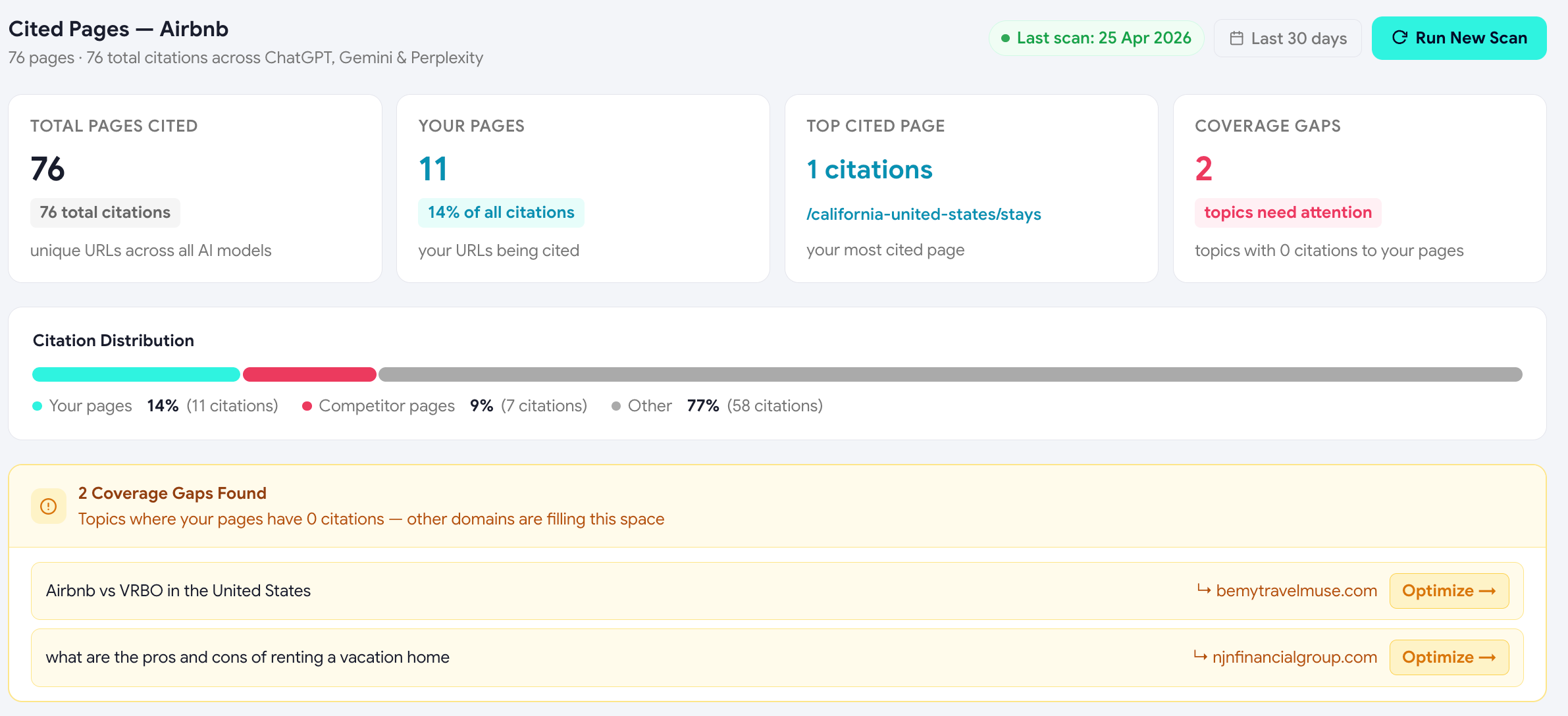
The Cited Pages view
Sidebar → Cited Pages. Each row is one URL the AI quoted, with:
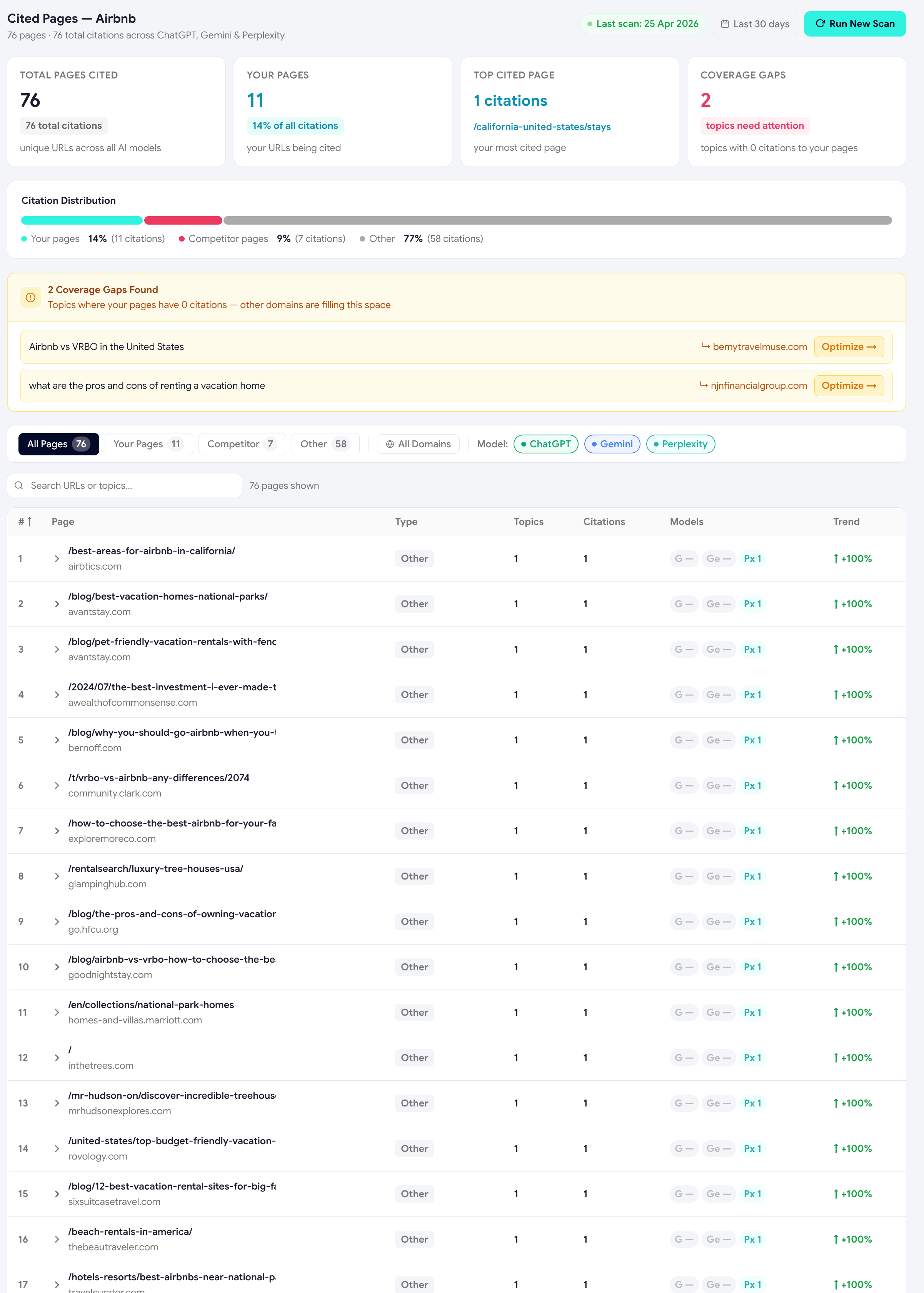
- The page title and URL
- How many times it was cited (across all your scans)
- Which prompt(s) and engine(s) cited it
- Whether it's your domain or someone else's
Sort by times cited to see the most influential individual pages in your space.
The Cited Domains view
Sidebar → Cited Domains. Same data, but rolled up to the domain level. This is the more useful view in most cases — it answers "which 10 sites do I need to be on to win this category?"
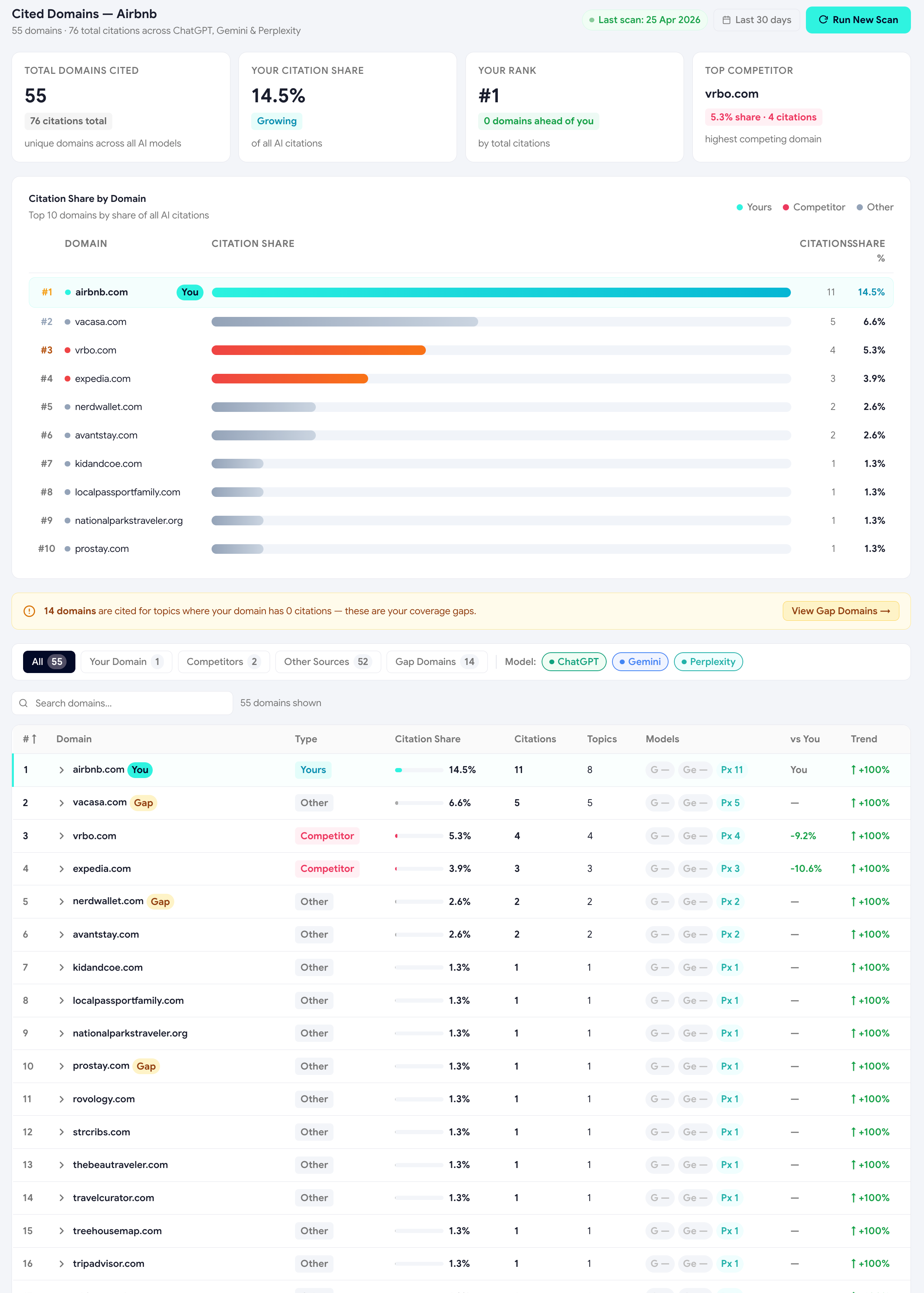
How to use the data
-
Find the top 10 domains you're not on
Sort Cited Domains by frequency. Filter to "not your domain". The top of that list is your citation roadmap.
-
Audit your category pages on those sites
Are you listed? Is your description accurate? Is there a comparison post you should pitch?
-
Pitch, claim, or get listed
For Wikipedia, your job is accuracy. For comparison sites (G2, Capterra, Gartner), claim and complete your profile. For roundup blogs, pitch a guest post or a quote.
-
Re-scan in 4 weeks
AI engines pick up new citations relatively quickly — within 4–6 weeks the new sources usually start appearing in answers about you.
"Yours" vs "Other" sources
Scout tags every cited URL as either your own or external. The healthy ratio depends on your industry, but as a rule of thumb: at least 30% of citations should be from your own domain. Less than that means the AI doesn't consider your site authoritative for the questions you care about — fix it via the AI Audit Agent.
Was this page helpful?
Thanks for the feedback — we read every response.