Static Rankings vs. Dynamic Responses
Google rankings are relatively stable. If you rank #3 for a keyword today, you’ll likely rank #3 tomorrow. AI responses are non-deterministic — the same question can produce different answers across sessions. This means GEO requires ongoing monitoring to track trends rather than point-in-time positions.
Who Needs GEO Most?
While every brand benefits from AI visibility, certain categories see the highest impact from GEO investment:
B2B SaaS Companies
Software buyers are heavy AI users. “Best [category] software” and “compare [tool A] vs [tool B]” are among the most common AI queries. If you sell software, GEO is no longer optional — it’s a core growth channel. B2B SaaS companies should be tracking their AI Visibility Score alongside their Google rankings.
D2C Brands
Direct-to-consumer brands in competitive categories (skincare, supplements, pet food, home goods) are increasingly discovered through AI recommendations. “What’s the best organic dog food?” is a prompt that directly drives purchase decisions. If your brand is the one ChatGPT recommends, you skip the entire traditional marketing funnel.
Professional Services
Law firms, accounting firms, marketing agencies, and consultancies are frequently recommended by AI platforms. “Best digital marketing agency for e-commerce” is a high-value prompt where GEO can directly generate leads. Agencies can also use GEO to differentiate themselves by offering AI visibility services to their own clients.
Local Businesses with Online Presence
As AI models become location-aware, local businesses with strong online review profiles benefit from GEO. “Best Italian restaurant in [city]” queries are already being answered by AI platforms, and the businesses that show up are the ones with strong review-site presence.
How to Do Both: An Integrated SEO + GEO Strategy
The good news: you don’t have to choose between SEO and GEO. The best approach is an integrated strategy that serves both channels. Here’s how:
Step 1: Audit Both Channels
Run your standard SEO audit (rankings, traffic, technical health) alongside an AI visibility scan. This gives you a complete picture of where you stand in both traditional and AI search.
Step 2: Create Content That Serves Both
Structure your content with answer-first formatting (good for GEO) while maintaining keyword optimization (good for SEO). Use H2/H3 headings with clear questions, provide direct answers in the first paragraph of each section, and include data points and citations throughout.
Step 3: Build Citations AND Backlinks
Get listed on review platforms (G2, Capterra, Trustpilot) — these build both domain authority for SEO and citation signals for GEO. Pursue industry roundup placements that generate backlinks while also being the exact type of content AI models reference.
Step 4: Leverage Reddit
Reddit is uniquely powerful for both SEO (Google indexes Reddit threads) and GEO (AI models heavily reference Reddit discussions). Building an authentic presence on relevant subreddits delivers dual value. Cogvert Scout’s Reddit Suggestions can help identify the right threads and subreddits to engage with.
Step 5: Implement FAQ Schema
FAQ schema helps Google display rich snippets (SEO win) and helps AI models extract structured Q&A pairs from your content (GEO win). Add FAQ schema to your most important product and category pages.
Step 6: Monitor Both Tracks
Use Google Search Console and your SEO tool of choice for traditional search. Use Cogvert Scout for AI visibility. Track both metrics over time and look for correlations — improvements in one often positively affect the other.
The Strategic Answer: Prioritize Based on Your Stage
If you’re a brand-new company with no online presence, start with SEO fundamentals. Build your website, create foundational content, establish basic authority. You need a website worth referencing before AI models can reference it.
If you have established SEO but haven’t thought about AI visibility, add GEO now. You likely already have many of the building blocks in place. An AI visibility audit will reveal what’s working and what’s missing.
If you’re in a competitive B2B or D2C category where buyers actively use AI for research, GEO should be a top-3 marketing priority in 2026. The brands that dominate AI recommendations today are building a moat that becomes harder to breach with each passing quarter.
For a comprehensive understanding of AI brand visibility and why it’s reshaping marketing, see our guide on What Is AI Brand Visibility and Why It Matters.
Frequently Asked Questions
What does GEO stand for?
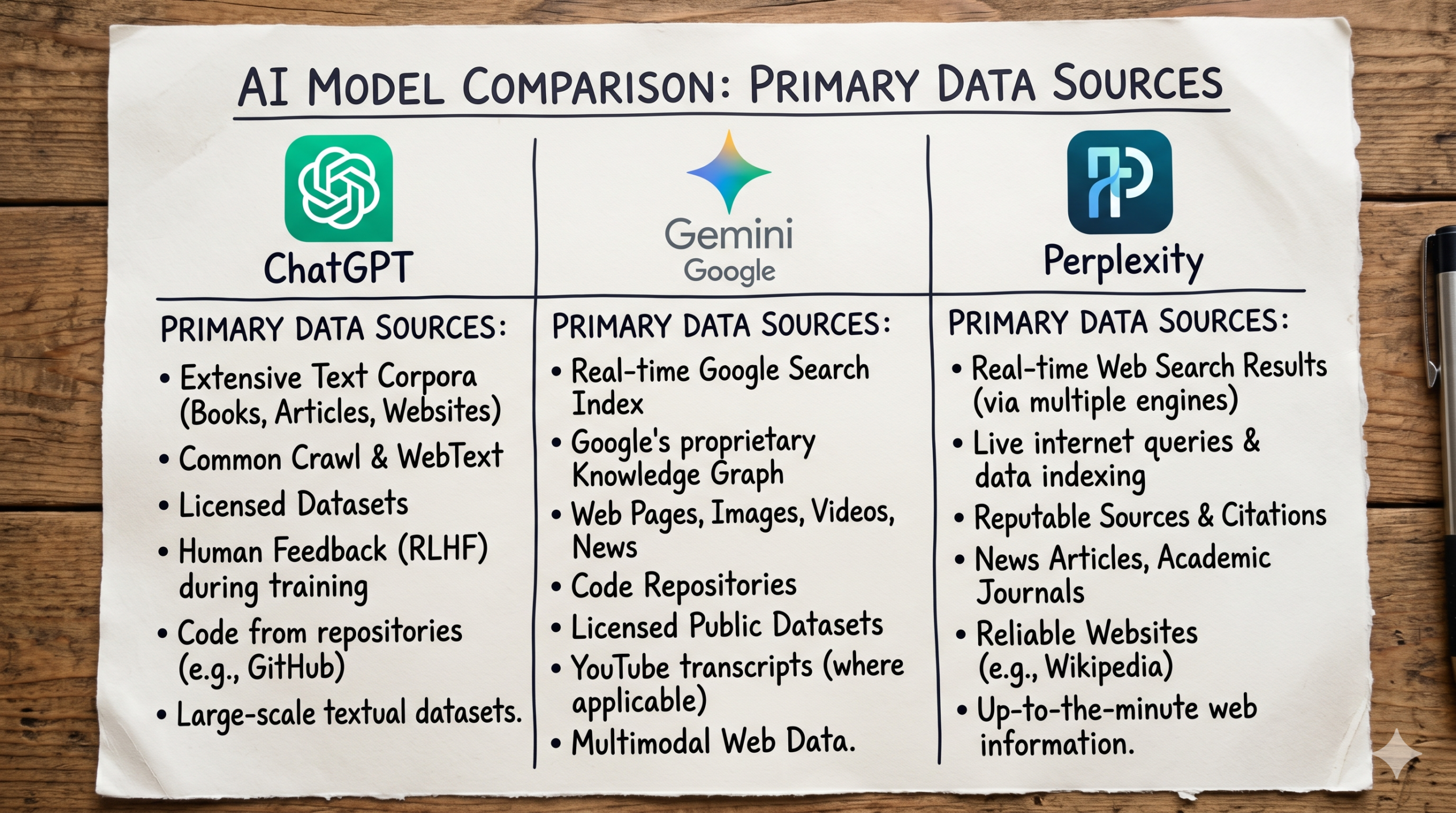
GEO stands for Generative Engine Optimization. It’s the practice of optimizing your brand to appear in AI-generated responses from platforms like ChatGPT, Gemini, and Perplexity. The term distinguishes this discipline from traditional SEO (Search Engine Optimization), which focuses on ranking in Google’s organic search results.
Do I need to stop doing SEO if I start doing GEO?
No. SEO and GEO are complementary disciplines. Many GEO best practices (quality content, structured data, E-E-A-T signals) also benefit your SEO. The best approach is an integrated strategy that serves both traditional search and AI platforms. Think of GEO as an additional channel, not a replacement for SEO.
How long does it take to see results from GEO?
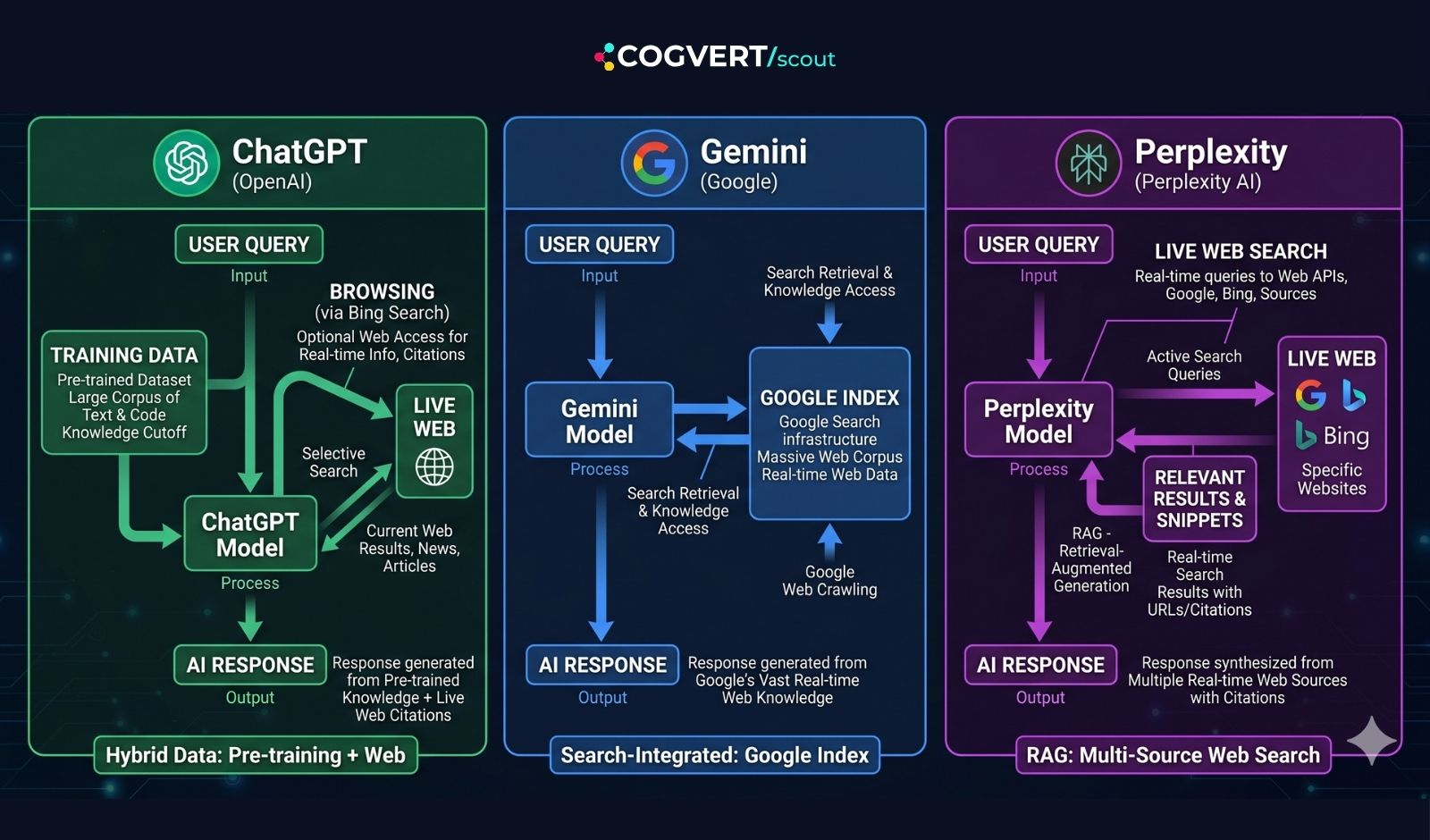
GEO results can appear faster than traditional SEO because some AI platforms (like Perplexity) use real-time web retrieval. Changes to your online presence — new review profiles, updated content, new comparison pages — can affect AI responses within 4 to 12 weeks. Platforms that rely on training data (like ChatGPT) may take longer to reflect changes, but even those update their knowledge more frequently in 2026 than in previous years.
Can small businesses benefit from GEO?
Absolutely. In many ways, GEO levels the playing field. A small business with strong reviews on G2 or Trustpilot, authentic Reddit presence, and well-structured product pages can outperform a larger competitor that hasn’t optimized for AI visibility. AI models don’t care about company size — they care about authority signals, content quality, and citation frequency.
What tools can I use to track my GEO performance?
Cogvert Scout is purpose-built for tracking AI brand visibility across ChatGPT, Gemini, and Perplexity. It provides a Visibility Score, competitor benchmarking, and an Optimize Hub with actionable recommendations across content, technical, citations, Reddit, and LinkedIn channels. You can start a free trial to see your current AI visibility.
Track your AI visibility with Cogvert Scout
See how ChatGPT, Gemini and Perplexity talk about your brand — and get a guided playbook to improve.
Start free trial →
15-day free trial · No credit card required